Blog Archives
ICHRRF Issues Official Statement Recognizing the Armenian Genocide

WASHINGTON, DC – On February 1, 2022, the International Commission for Human Rights and Religious Freedom (ICHRRF) released the following statement in support of the remembrance of the Armenian Genocide:
“As an organization founded on the principles of universal brotherhood, cooperation, mutual respect, compassion, and respect for basic human rights and religious freedom, the ICHRRF is fully committed to promoting human rights and fundamental freedoms as the critical values connecting Humanity. Hence the organization stands for upholding the dignity of victims of genocide and other atrocity crimes and pursuing justice for these acts.
“During the first World War, the Ottoman Turkish Islamic Caliphate systematically annihilated around 1.5 million Armenian Christian citizens. It is sometimes called the first genocide of the 20th century. The Armenian Genocide took place more than 100 years ago. However, the systematic killing of civilian men, women and children is not just in the past.
“ICHRRF applauds the US President Joe Biden’s decision to officially recognize the 1.5 million Armenians who died in the Ottoman-era Armenian genocide during World War I. This is a much wanted initial bold step towards acknowledging the truth, history, and invaluable support for all the victims of hatred, religious atrocities, ethnic cleansing and systematic annihilation campaigns against vulnerable communities around the globe.
“Turkey, the successor state of the Ottoman Caliphate Empire still denies this crime against humanity. Thirty-one countries, so far, have recognized the Armenian genocide and urged Turkey to take responsibility for this heinous crime. However, many nations refuse to recognize the killings as genocide, fearing a fallout in the strategic alliance with Turkey. We urge Turkey, Pakistan, Azerbaijan and other countries that deny Armenian genocide to step up to the stark historical facts and stop indulging in shameful genocide denial for political convenience. It is imperative for all societies to openly acknowledge complicated national history to prevent group-targeted violence from happening anymore in 21st century.”
ICHRRF is a US-based non-profit organization focused on promoting human rights, religious and philosophical freedom and a polycentric worldview through continuous monitoring, education, policy research and collaboration.
Last month, the ICHRRF hosted FLArmenians.com Founder Taniel Koushakjian for an online presentation on “The Armenian Genocide and its Continued Denial by Perpetrators” as part of ICHRRF’s #SpeakingUpSeries on human rights and religious freedom.
New Poll Finds More Armenians Feel Country is Going in the Wrong Direction

By Harut Sassounian
Syndicated Columnist
The Washington-based International Republican Institute’s public opinion poll, conducted November 22-December 5, 2021, measured the Armenian population’s views on political, economic, and security issues. The survey was funded by the U.S. Agency for International Development.
The poll revealed a key finding: 46% of the population thinks that “Armenia is headed in the wrong direction,” while only 34% thinks that the country is headed in “the right direction.” This indicates that Prime Minister Nikol Pashinyan’s often-repeated boast that he enjoys “the people’s mandate” is not necessarily so. This is a significant shift from the 54% of the votes the Prime Minister’s political party received in the June 20, 2021 parliamentary elections. More importantly, the number of those who think that Armenia is headed in the wrong direction increased from 20% in May 21, 2021 to 34% in July 2021 and 46% in December 2021.
However, on another important question, “Do you believe that you or people like you can influence decisions made in our country,” 66% said yes, while 33% said no. This is definitely a positive indication for the authorities.
The next question: “Are you satisfied or dissatisfied with the way democracy is developing in our country?” the country was almost evenly split: 51% yes and 47% no.
To the question: “Do you consider our country to be governed in the interest of the majority of people or in the interest of some groups?” 61% said it was governed in the interest of “some groups,” while only 31% said it was governed in the interest of “the majority.” This reflects negatively on the current government.
On the positive side, 66% of the people surveyed said they are “not afraid of openly expressing their opinions,” while 31% said they were afraid to do so.
To the question: “How satisfied or dissatisfied are you with the work of the following state bodies?” the top approval was given to Pashinyan government’s frequent critic, Human Rights Defender’s (Ombudsman’s) office (68% satisfied vs. 25% dissatisfied); the police (68% vs. 29%); local governments (63% vs. 33%); armed forces (58% vs. 37%); Central Electoral Commission (57% vs. 33%); and National Security Service (50% vs. 41%). The Prime Minister’s office came in 7th place with 49% satisfied vs. 48% dissatisfied. The Armenian Parliament came in 16th place with 31% satisfied and a whopping 67% dissatisfied. This is not surprising as the parliament’s televised sessions frequently show scenes of shouting matches, insults, and physical altercations ending with abrupt orders by the parliament’s leadership representing the Prime Minister’s political party to turn off the TV cameras to hide the disorderly conduct of the rowdy parliamentarians.
Turning to foreign policy issues, those surveyed ranked France on top with 92% as having the best relationship with Armenia. Then came Iran (80%); the United States (77%); China (75%); European Union (69%); Russia (64%); Georgia (58%); UK (47%); other (10%); Turkey (5%); and Azerbaijan at the very bottom with 3%.
When asked “Which two countries were the most important political partners for Armenia?” Russia (57%); France (50%); the U.S. (38%); Iran (23%); European Union (5%); China (5%); Georgia (3%); and India (1%).
In response to “Which two countries are the most important economic partners of Armenia?” Russia again came first with 61%; Iran (40%); (China (29%); the U.S. (16%); France (14%); Georgia (8%); European Union (7%); India (2%); and Turkey (2%).
When asked “Which 2 countries are the most important security partners for Armenia?” the answers were: Russia (64%); France (32%); Iran (31%); the U.S. (26%); European Union (5%); China (4%); Georgia (2%); and India (1%).
“Which 2 countries are the greatest political threat to Armenia?” The survey respondents said: Turkey (90%); Azerbaijan (77%); Russia (15%); UK (3%); Israel (2%); the U.S, (2%); and Georgia (1%).
“Which 2 countries are the biggest economic threat to Armenia?” Survey respondents said: Turkey (68%); Azerbaijan (52%); Russia (17%); Georgia (10%); Iran (4%); the U.S. (1%); China (1%); and European Union (1%).
“Which 2 countries are the greatest security threat to Armenia?” Survey respondents said: Turkey (88%); Azerbaijan (81%); Russia (11%); Iran (2%); the U.S. (2%); Israel (2%); Georgia (1%); France (1%); and UK (1%).
“The relationship with which 2 countries needs to be improved for the development of Armenia?” The survey respondents said: Russia (53%); the U.S. (35%); Iran (29%); France (25%); China (15%); European Union (9%); Georgia (7%); Turkey (5%); Azerbaijan (4%); India (1%); and UK (1%).
The survey then asked if the respondents agreed or disagreed with the following three questions:
- 73% agreed and 25% disagreed that “Armenia should start a dialog with Turkey and normalize bilateral relations, while pursuing the agenda of recognition of the Armenian Genocide by Turkey.”
- 70% agreed and 27% disagreed that “Armenia must establish bilateral relations with Turkey by putting forward its own preconditions such as Turkey’s non-hindrance of peace in Artsakh.”
- 44% agreed and 53% disagreed that “Under no circumstances Armenia should pursue normalization of relations with Turkey.”
Most survey respondents disagreed with Pashinyan that opening roads with Azerbaijan is beneficial to Armenia. When asked: “How will the opening of transport routes with Azerbaijan impact Armenia’s economic development?” 27% gave a positive answer; 59% negative.
The same is true for Turkey. When asked: “How will the opening of transport routes with Turkey impact Armenia’s economic development?” 35% gave a positive answer; 53% negative.
When asked: “How important is the resolution to the Artsakh conflict for the future of Armenia in the next 10 years?” The overwhelming 96 % said “important”; 3% “unimportant.”
The survey asked: “What would be an acceptable solution of the Artsakh conflict?”
- 35% said: “Recognition of Artsakh as an independent state.”
- 34% said: “The unification of Artsakh with Armenia as a region of the Republic of Armenia.”
- 16% said: “Establishment of the status of the Artsakh Autonomous Region within Armenia.”
- 11% said: “Establishment of the status of Artsakh within Russia.”
- 1% said: “Maintaining the current status quo.”
When asked: “Is Armenia able to independently defend its borders with Azerbaijan, without the help of any other country?” 46% said yes; 53% no.
Finally, when asked: “Which country would you prefer to assist Armenia in defending its borders?” 47% said Russia; the U.S. (18%); France (14%); Iran (8%); China (2%); European Union (1%); all three Minsk Group countries of Russia, the U.S., France (1%); and NATO (1%).
Whether we agree or disagree, these are the answers that the people of Armenia gave. It reflects their current mindset.
Florida Armenians Endorsed Candidates Win Big on Election Day
BOCA RATON, FL – Florida Armenians is pleased to announce that our endorsed candidates from the 2021 election cycle won their elections.
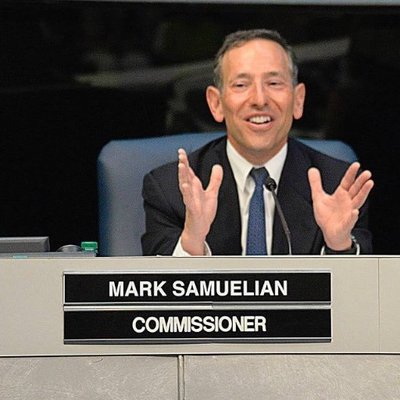
In the City of Miami Beach, Commissioner Mark Samuelian won his re-election without opposition. Samuelian is the only Armenian American elected government official in the State of Florida and was the first Armenian to win an election in Miami-Dade County when he was elected to the City Commission in 2019 with Florida Armenians endorsement. In 2020, the City of Miami beach passed a resolution introduced by Commissioner Samuelian officially recognizing the 1915 Armenian Genocide.

Florida Armenians endorsed Miami Beach Mayor Dan Gelber in 2021, as we did in 2019, and he won his contested election with 62% of the vote, securing a third, two-year term.
2022 Special & Municipal Elections
Following the death of Congressman Alcee Hastings (D-FL) on April 6, 2021, a special election to fill the vacant Florida Congressional District 20 seat was held on January 11, 2022. Hastings was a founding member of the Congressional Azerbaijan Caucus, a group of Members of Congress interested in Azerbaijan, a Muslim-majority dictatorship neighboring the Republic of Armenia in the South Caucasus that has enlisted Afghan and Syrian/ISIS terrorist mercenaries to kill Christian Armenians in wars it launched against Armenia in 1994 and 2020, respectively. Hastings, who broke with his party’s leadership in siding with the genocidal Azerbaijani and Turkish regimes, repeatedly opposed U.S. recognition of the Armenian Genocide, despite Armenian Americans’ deep relationships with African Americans and relatable struggles as a minority community often subject to similar discrimination and prejudice.
The deep blue FL-20 Congressional seat saw eleven Democrats run to replace Hastings in the Democrat primary election held on November 2, 2021. Broward County lawyer and health care executive Sheila Cherfilus-McCormick defeated the Hastings-endorsed candidate, Broward County Commissioner Dale Holeness, by five votes.

Florida Armenians did not offer an endorsement in the FL-20 special election, but looks forward to working with Congresswoman Cherfilus-McCormick (D-FL), the first Haitian American Representative from Florida, in the months and years ahead.
The FL-20 Congressional district seat vacancy set off a domino effect as many local elected officials vied for the open seat. Florida is one of five states with a “resign-to-run” law, which prohibits a current office holder from running for a different seat without first resigning the seat they hold, should the terms of the current office held overlap with the office sought.
In addition to Commissioner Holeness, Florida State Reps. Omari Hardy (D-FL-88) and Bobby DuBose (D-FL-94) resigned their West Palm Beach-based and Ft. Lauderdale-based State House seats, respectively, in order to run for Congress in the vacant FL-20. Florida State Senator Perry Thurston (D-FL-33) also resigned his northwest Ft. Lauderdale-based State Senate seat in order to seek the vacant FL-20 Congressional seat.
A special election for the FL-33 State Senate, FL-88 and FL-94 State House seats has been scheduled take place on March 8, 2022, which is when Palm Beach County & Broward County will hold municipal elections.
Florida Armenians will release our slate of endorsed 2022 South Florida special election and municipal candidates in the coming days as early voting begins in Palm Beach County on February 12th.
For more information about municipal elections in South Florida please visit the Palm Beach County Supervisor of Elections website and Broward County Supervisor of Elections website.
Nineteen (19) Palm Beach County municipalities will hold elections on March 8, 2022, they are: Boynton Beach, Greenacres, Haverhill, Highland Beach, Juno Beach, Jupiter, Jupiter Inlet Colony, Lake Clarke Shores, Lake Park, Lake Worth Beach, Lantana, Loxahatchee Groves, North Palm Beach, Pahokee, Riviera Beach, Royal Palm Beach, South Palm Beach, Wellington, and West Palm Beach.
Six (6) Broward County municipalities will hold elections on March 8, 2022, there are: Hillsboro Beach, Lauderdale-By-The-Sea, Lazy Lake, Lighthouse Point, Pembroke Pines, and Sea Ranch Lakes.
Municipal elections in Florida are non-partisan.




 Florida Armenians