Blog Archives
Moral Considerations in the Art-Restitution Lawsuit Between the Armenian Church and the Getty Museum
Moral Considerations in the Art-Restitution Lawsuit Between the Armenian Church and the Getty Museum
By Michael Toumayan
FLArmenians Guest Contributor
On Nov. 4, a Los Angeles Times article, written by Mike Boehm, reported that in an effort to get back the Canon Tables of the 13th-century Zeyt’un Gospels from the Getty Museum, the Armenian Diaspora has inaudibly put its weight behind the Armenian Orthodox Church’s quest to repatriate the allegedly stolen illuminated manuscripts back to Armenia, where the rest is housed at the Mesrop Mashtots Institute of Ancient Manuscripts.
In 1915, as Armenians were subjected to a genocidal campaign by the Ottoman Empire, the intact codex changed hands for safekeeping. The eight pages that were torn from the larger codex during the Armenian Genocide ultimately resurfaced with an Armenian American immigrant family in Massachusetts, which sold them to the Getty in 1994.

The Getty Museum
Church attorneys were initially asked by the Getty to come up with solutions, and no less than 16 were put forth, only to be rejected by the Getty. Clearly the content of a proposal for a solution is a critical component to any successful resolution of conflict, but equally necessary is the timing of the efforts. Resolution can only be achieved if the parties are sincere in negotiating.
One wonders whether the Getty was ready and sincere when it asked church attorneys to come up with solutions. However, for the sake of being aware of our cognitive biases, we should also question whether both parties were engaging in positional bargaining, a negotiation strategy that involves holding on to a position, rather than interest-based bargaining in which parties collaborate to find a “win-win” solution to their dispute.
Nevertheless, on Nov. 3, 2011 a Los Angeles Superior Court judge denied the museum’s motion to dismiss the plaintiff’s claim that the Canon Tables are “wrongfully in the possession, custody and control” of the J. Paul Getty Trust, in the Getty Museum. Instead, the judge ordered the parties to four months of mediation, scheduling a March 2 resumption if the case isn’t settled. Citing that it was “not clear” whether the case would fall within statute-of-limitations law, perhaps the judge’s ruling may create the necessary conditions for the dispute to be ripe, and both will perceive that there is a suitable way out.
With a murky history and 90 years later, one cannot rule out the Getty’s possible legal possession and title to the disputed manuscripts. Simultaneously, the Getty’s concern in the preservation of world artistic heritage should not confine itself to considering just the legal entitlement. In mediation, where context is pivotal, there is an ethical obligation that rests on the museum taking into account the moral strength of the church’s case based on the circumstances during times of turmoil. Now is the time for the museum to exhibit consistency with its own core ethical values while also demonstrating sensitivity to the sacred values of the Armenian nation in its quest for restorative justice.
For the mediation to be successful, both must enter into it willingly and away from a zero-sum mindset, through a cooperative approach. The potential benefits of mediation will outweigh the steep cost of litigation, but more importantly, the long-term outcome will be a healed and expanded relationship between the two. This may open the path for a joint restoration project where both can take part in repairing the lost gleam of the larger Zeyt’un Gospels and have them showcased with other extraordinary works of Armenian art from the vaults of the church.
Michael Toumayan is an independnt political commentator on the Caucasus and Middle East affairs. He holds a master’s degree in conflict resolution and mediation from Tel Aviv University in Tel Aviv, Israel. He resides in Delray Beach, Florida.
SOURCE: http://www.armenianweekly.com/2011/11/29/moral-considerations/
Florida Armenians Profile: Tallahassee City Commissioner Mark Mustian
Florida Armenians Profile: Tallahassee City Commissioner Mark Mustian
By Taniel Koushakjian
FLArmenians Political Contributor
Mark Mustian isn’t you’re average City Commissioner, or Armenian-American. He was born in Panama City, Florida and grew up in Tallahassee, where there is no major Armenian presence. A first generation Floridian, Mustian’s Armenian roots in America date back to the early 1800’s, which he recently uncovered.
 Mr. Mustian graduated from the University of Florida with his B.S. and J.D. in 1980 and 1983, respectively. A practicing attorney since 1983, Mustian today focuses on public finance, local governmental law, and land use and real estate law with the law firm Nabors, Giblin & Nickerson.
In addition, Mustian is also an author of two books and since 2003, one of five Tallahassee City Commissioners.
In 2010, Mustian published his second book “The Gendarme,” and recently concluded a book tour around the U.S, where I had a chance to meet him. He agreed to do an interview for Florida Armenians and last week, I sat down with Mr. Mustian and spoke to him over Skype.
What was life like growing up in Tallahassee?
Well it was different than most Armenian-Americans. There aren’t a lot of “Native Floridians” in Florida. It’s a lot different than what people think of Florida – this is not Miami. It’s more like southern Georgia. So I grew up in a small southern town.
My whole life people would ask if I was Armenian (smiling), and I would tell them ‘yeah.’ I always knew I was part Armenian, on my father’s side, but I never really knew what an Armenian was beyond the Armenian Genocide.
You are the author of two books. Your latest, “The Gendarme” is a story about a Turkish soldier who falls in love with a young Armenian girl during the Armenian Genocide. What inspired you to write this story?
I was hosting a party at my home sometime in 2002 and someone asked me, again, if I was Armenian. The gentleman also asked if I had ever read “Black Dog of Fate” by Peter Balakian, and I hadn’t. This led me to not only read the book, but also uncover my Armenian roots and learn about Armenian history. I only knew generally about the Armenian Genocide and when I got into reading the stories, the trek, the survivors, it really impacted me. I read everything I could find on the subject. Eventually I decided to try and write a novel about the genocide, but since the point of view of the survivors has been covered so well by the survivors themselves or their descendants, I decided to take the point of view of one of the gendarmes.
In addition to being an attorney and an author, you are also a 3-term Commissioner for the City of Tallahassee. What brought you to a life of public service?
My father was a Hospital Administrator in Tallahassee, so I grew up in a family with a history of public service. In 2002 a long standing City Commissioner passed away in office and I was in the running to be appointed to fill his seat. After much preparation, I didn’t get it. The following year, another Commissioner resigned and having already prepared, I ran in the open seat race and won.
That was around the same time you started to write about Armenians?
Yes, I started writing “The Gendarme” about the same time.
What is your favorite accomplishment, something you are proud to have achieved?
Before running for City Commissioner, I led a citizens group, the Economic and Environmental Consensus Committee (EECC). We put together a package of development projects for the city through an optional referendum on extending the sales tax. The Capital Cascades Greenway Project was approved and the projects are today being finalized.
In 2012 we will be opening Cascades Park, which, among other things, will have a cascading waterfall feature. Some people don’t know that the Florida state capitol was supposedly located in Tallahassee because of a similar geographical feature that over the years with the surrounding development became lost. With this project we cleaned up the area and restored some of the original beauty of Tallahassee. I am very happy to have worked with a dedicated group of individuals and give something back to our community.
Mark Mustian lives in Tallahassee with his wife Greta and three children, Bern, Eva and Jackie.
Florida Representatives Cosponsor Legislation Urging The Republic of Turkey to Safeguard its Christian Heritage
Florida Representatives Cosponsor Legislation Urging The Republic of Turkey to Safeguard its Christian Heritage
By Taniel Koushakjian
FLArmenians Political Contributor
On Tuesday, June 15, H. Res. 306, legislation “urging the Republic of Turkey to safeguard its Christian heritage and to return confiscated church properties” was introduced by House Foreign Affairs Subcommittee Chairman on Terrorism, Nonproliferation and Trade, Rep. Ed Royce (R-CA) and House Foreign Affairs Committee Ranking Member Rep. Howard Berman (D-CA). Congressman Ed Royce is also the Co-Chair of the Congressional Caucus on Armenian Issues (Armenian Caucus). H. Res. 306 calls for the “return to their rightful owners all Christian churches and other places of worship, monasteries, schools, hospitals, monuments, relics, holy sites, and other religious properties, including movable properties, such as artwork, manuscripts, vestments, vessels, and other artifacts,” in Turkey.
Joining Congressmen Royce and Berman were 30 original cosponsors, including Florida Reps. Gus Bilirakis (R-FL) and Ileana Ros-Lehtinen (R-FL). Congressman Bilirakis represents Florida’s 9th Congressional district (Palm Harbor) and serves on the House Foreign Affairs Committee, Homeland Security Committee and is Vice Chairman of the Veterans’ Affairs Committee. Rep. Bilirakis has a strong voting record in support of Armenian issues, including Armenian Genocide affirmation, and is the Co-Chair of the Congressional Caucus on Hellenic Issues. Congresswoman Ileana Ros-Lehtinen represents Florida’s 25th Congressional district (Miami) and Chairs the House Foreign Affairs Committee.
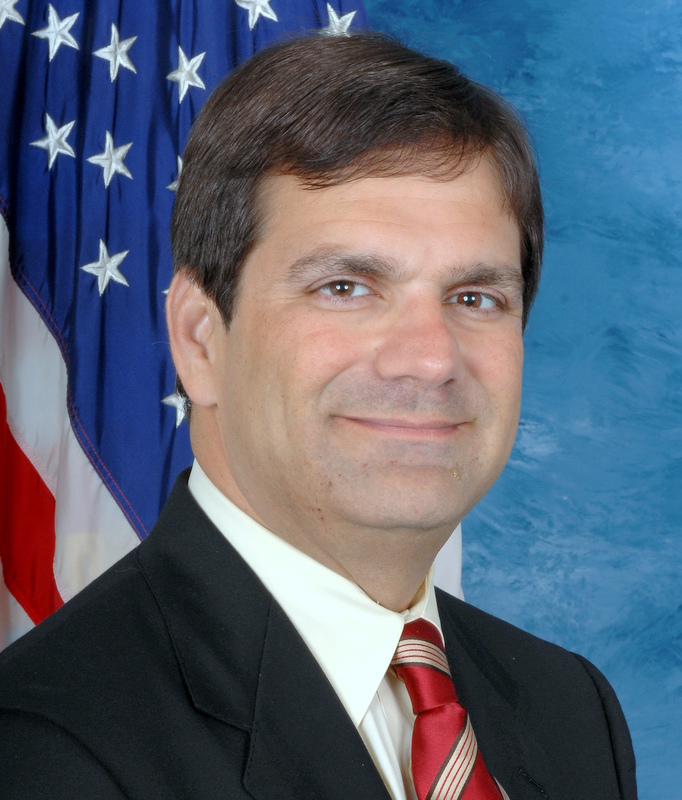
Rep. Gus Bilirakis (R-FL)
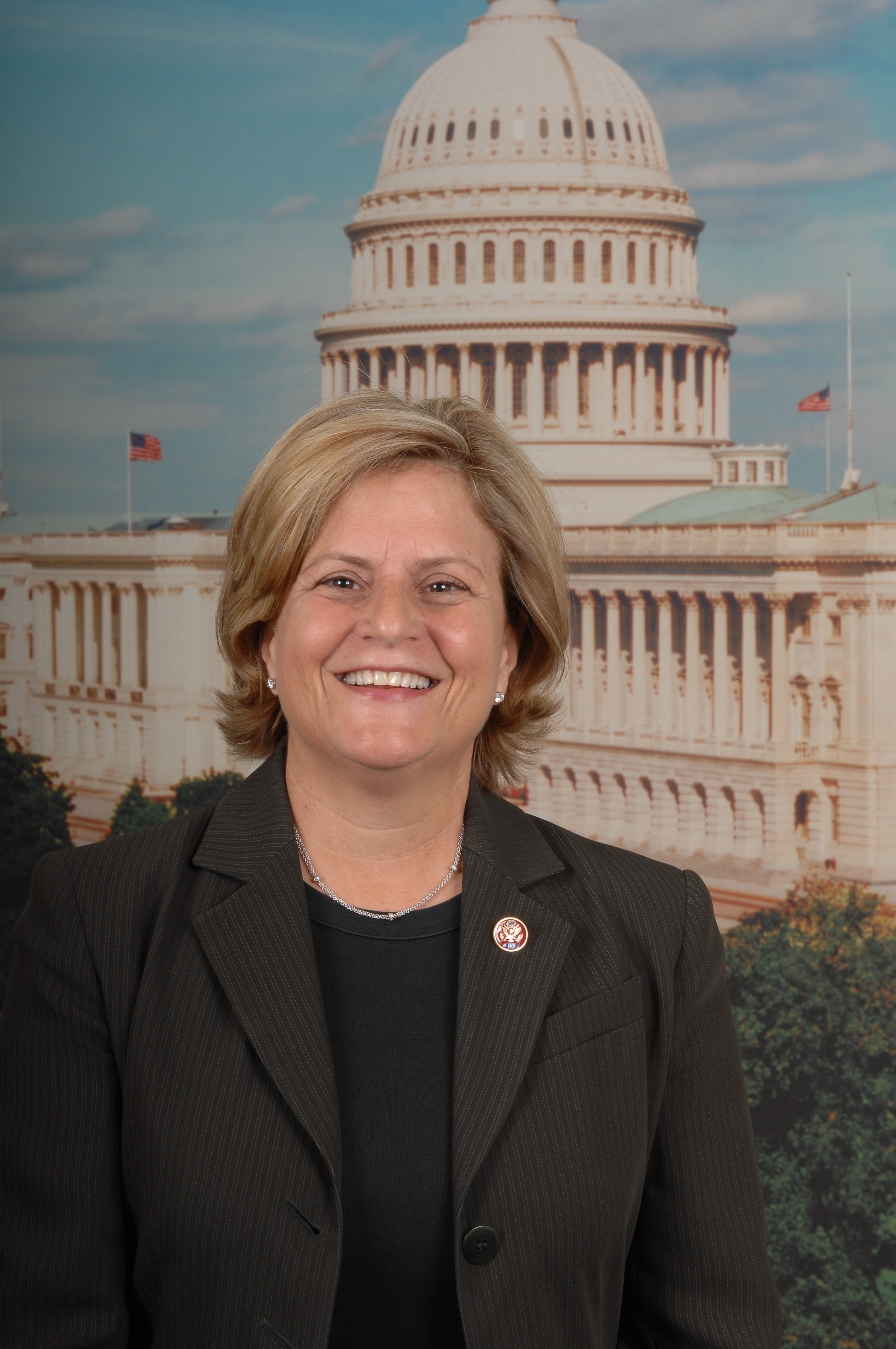
Rep. Ileana Ros-Lehtinen (R-FL)
Both Chairwoman Ros-Lehtinen and Rep. Bilirakis are members of the Armenian Caucus. However, although voting in support of Armenian Genocide resolutions in 2000 and 2005, Rep. Ileana Ros-Lehtinen voted against the same legislation in 2007 and 2010.
In addition to H. Res. 306, on June 15 Representatives Robert Dold (R-IL) and Adam Schiff (D-CA) along with Armenian Caucus Co-Chairs Reps. Ed Royce (R-CA) and Frank Pallone, Jr. (D-NJ) introduced H. Res. 304, the Armenian Genocide resolution. Congressman Bilirakis joined his Armenian Caucus colleagues by cosponsoring H. Res. 304 on July 16. He is the only Member of the Florida delegation to consistently cosponsor Armenian Genocide resolutions. Both bills have been referred to the House Foreign Affairs Committee where they await committee action.
As the size of the Armenian community expands throughout the state, it is important for Florida Armenians to inform and educate their elected officials about important issues and concerns. From state and local governments, to our Representatives serving us in Congress, Florida Armenians are ready to play an active role in having our voice heard in Washington.
* This story was updated on July 18 at 8:47 p.m.