Blog Archives
City of Tallahassee Planning Commission Mulls Vote on Controversial Charter School with Ties to Turkish Islamic Cleric
By Taniel Koushakjian
FLArmenians Political Contributor
October 1, 2013

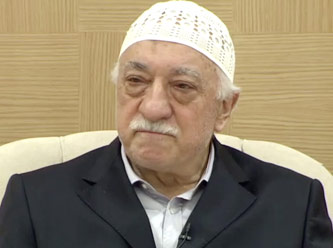
TALLAHASSEE, FL – The Tallahassee-Leon County Planning Commission will hold a public hearing today on a proposal to build a controversial charter school, Stars Middle School, at 3607 Thomasville Road in Tallahassee, reported FLArmenians.com. Stars Middle School is part of an international network of Muslim schools operated by the “Gulen Movement,” a reference to the cult-like nature of followers of Turkish cleric Fethullah Gulen. An Islamic political figure, author and religious scholar, Gulen is a Turkish citizen who has lived in self-imposed exile in the Poconos Mountains of Pennsylvania since 1998.
Although the process in Tallahassee is currently held up due to the school’s inability to file the necessary paperwork, the current controversy surrounding the city proposal has centered on community concerns of traffic impacts, safety, and city zoning jurisdictions, according to a report by WCTV. The Planning Commission has received over 200 calls and emails in petition to the proposed school, WCTV says. However, a closer look at the shadowy network reveals a deeper process at play, most likely unknown to Tallahassee city officials or residents.
THE MOVEMENT IN AMERICA
The Gulen movement’s network of schools can be found in a dozen countries across the globe. Here in the United States, the Gulen movement – a network of Turkish and Azerbaijani businessman, scientists, engineers, and Islamic religious figures – has propped up 140 schools in 26 states. Texas tops the list with 40 Gulen-connected schools, followed by Ohio with 30. However, the schools have been had difficulty in some states, such as Arizona and Utah, where financial troubles, shady business dealings, and revelations of genocide denial have prompted citizen advocacy groups, teachers and parents to question their merits.
A parent of a student at Sonoran Academy, a Gulen school in Arizona, told the Tucson Weekly, “We found one document, in Turkish, that talks about the purpose of these charter schools,” says the parent. “They refer to them very explicitly as schools (belonging) to their movement. They’re calculating, and they say if they can have something like 600 schools, then every year, they can produce 120,000 sympathizers for Turkey.”
“I sent my kids to this school because I wanted them to meet regular Muslims and to see them as ordinary people,” she says. “But when I find that my kids are to be turned into genocide-deniers, that’s very disturbing to me,” the parent told Tucson Weekly.
The parent, who spoke to the newspaper on the condition of anonymity for fear of reprisal, was referencing the 1915 Ottoman Turkish Genocide of 1.5 million Christian Armenians in World War I. Over 20 countries and 43 U.S. states recognize the Armenian Genocide, as does a host of respected historians, such as the International Association of Genocide Scholars, the ultimate academic authority on the Holocaust and genocide.
In Utah, Beehive Science & Technology charter school faced multiple issues. Muhammet “Frank” Erdogan, a Muslim from Azerbaijan and the principal of Beehive, was the center of controversy when he “questioned conventional accounts” of the Holocaust and fired a teacher for not revising the lesson plan on World War II, according to the Salt Lake Tribune. Beehive was ultimately shut down because it “continuously failed to meet ‘accepted standards of fiscal management,’” according to the Desert News. “This is a case of chronic business mismanagement,” Brian Allen, chairman of the Utah State Charter School Board told the Desert News, after the school lost thousands of dollars.
One of the main problems is that the Gulen schools are funded by U.S. taxpayers, to the tune of millions of dollars in some states. Furthermore, the Gulen schools spend those American tax dollars to bring teachers over from Turkey, paying all legal and immigration costs, as well as their salaries. Even when American teachers are hired, they are typically paid less than their Turkish counterparts.
Florida has its history with Gulen schools too. Last year, Daily Broward reported that Riverside Science Academy had hired Broward County Democratic Party Chairman Mitchell Caesar to lobby the Broward County School Board on its behalf. The proposal for Riverside Science Academy in Margate did not materialize, as the necessary paperwork was also not filed in time.

The Gulen network’s rise has caught the attention of federal authorities as well. In 2011, the Philadelphia Inquirer reported that the charter school network and their leader, Fethullah Gulen, were under federal investigation by the FBI and Department of Labor. Although he resides in Pennsylvania, citizens there have pushed back as well. In July of this year, locals held a protest in Saylorsburg, PA to “Stop the World’s Most Dangerous Islamist.” Another slogan of the protest reads “Stop Cheating of American Taxpayers.”
“I’d be shocked if Floridians knew the true intentions behind these schools and willingly opened their wallets to pay for their construction and for non-U.S. citizens to come to America and teach Holocaust denial to our kids,” stated Margaret Atayants, FLArmenians Tallahassee Officer.
TALLAHASSEE PLANNING COMMISSION MEETING TONIGHT
The Tallahassee-Leon County Planning Commission hearing is set to take place today, October 1, 2013, at 6:00 PM at Tallahassee City Hall, Second Floor. The proposal for Stars Middle School, Ordinance Number 13-Z-26, is scheduled for debate this evening, according to the Commission’s website. The website also includes a recommendation below the proposal to adopt the ordinance and approve building the Gulen school in Tallahassee. However, a spokesman for the Commission informed FLArmenians on the morning of the hearing that debate on this issue has been continued to the November 5th meeting.
***UPDATE – The Tallahassee Planning Commission continued debate on the ordinance to the following meeting on Tuesday, November 5, 2013 at 6:00 PM. The status of the ordinance is not yet clear. However, the recommendation to adopt the proposal has been removed from the Commission’s website.
Floridians are encouraged to call and/or email the Tallahassee City Planning Commission, as well as Tallahassee Mayor John Brooks, and voice their opposition to “Ordinance Number 13-Z-27,” a proposal to build the Gulen-linked Stars Middle School in Tallahassee.
OPPOSE ORDINANCE NO. 13-Z-27
City of Tallahassee Planning Commission
– Call (850) 891-6400 and/or Email by clicking here.
Tallahassee Mayor John Brooks
– Call (850) 891-8181 and/or Email by clicking here.
Florida’s tax dollars need to be spent wisely, not on mysterious charter schools run by an Islamic cleric in Pennsylvania. There are plenty of qualified teachers here in Florida.
This story was updated at 12:25 PM on Wednesday, October 2, 2013 to reflect the postponement of the hearing.
Armenian Billboards Put Touchy Topic on the Road

A billboard thanking countires that recognize genocide against Armenians is seen Wednesday, April 17, 2013, along I-95 in Pompano Beach. Photo courtesy of Joe Cavaretta, SunSentinel
By Diane C. Lade
Sun-Sentinel
Four striking billboards, crowded in among beer and cosmetic surgery ads along two South Florida highways, contain one sentence starkly lettered in white on a black background: “Thank you for officially recognizing the Armenian Genocide — April 24, 1915.”
It’s a bold move to bring public attention to an almost century-old tragedy that Armenian Americans say takes a back seat to other large-scale human rights violations: the killing of 1.5 million of their ancestors during World War I in what is now Turkey.
But until now, the identity of those behind the signs was a mystery. Small wording at the bottom of the 672-square-foot billboards states only that they were “paid for by individuals concerned about the plight of Armenians.” They list no names.
(Also on FLArmenians: Armenia Avenue Anyone? The Story of Armenia Venue in Tampa Bay, Florida)
That’s because it’s not about publicity, it’s about bringing larger awareness to the issue, said George Pagoumian, 70, a Fort Lauderdale businessman and philanthropist who came forward only after the Sun Sentinel began researching the signs.
The four billboards are located at Florida’s Turnpike-Interstate 595 interchange; and on Interstate 95 at Southern Boulevard in West Palm Beach, at Atlantic Boulevard in Pompano Beach and at Northwest 79th Avenue in Miami. And the campaign was organized and financed through Armenian community members, said Pagoumian, declining to list the other contributors or how much was donated.
“We don’t want money to dictate this,” said Pagoumian, whose parents were Armenian and who lost his grandmother and other relatives to the killings. “Our grandmothers, our family who died are paying. They are sending checks from heaven.”
Twenty countries have officially recognized the killings as genocide, and those nations’ flags are on the South Florida billboard, under the words “thank you.” The United States is not among them — something Armenian Americans have fought passionately to change for years. They are pressuring President Obama to make an executive declaration.
But calling what happened in Armenia almost 100 years ago a “genocide” is a very touchy subject — especially in South Florida. About 4,000 people of Armenian descent live in Broward and Palm Beach counties, according to the Census, alongside about 5,000 of Turkish descent. Turkey denies that Armenians were targeted because of race or ethnicity.
Fuat Ornarli, past president of the Florida Turkish American Association, has not seen the billboards but dislikes what he considers a politicization of the issue.
“I would like to express my deep sorrow to see such billboards around us, since this subject is so politicized, and so biased,” said Ornarli, of Miami.
Genocide declarations should be made by scholars, not politicians, Ornarli said, adding that not all historians agree the Armenian deaths should be labeled genocide. Like the leaders of his native country, he said the deaths were casualties of war, exacerbated when the Armenians aligned themselves with Russia, Turkey’s enemy.
Rosanna Gatens, director for the Center for Holocaust and Human Rights Education at Florida Atlantic University, said the removal and killing of Armenians by the Turks is taught along with the Holocaust and other modern genocides in the state-mandated human rights education program. Each year, a few teachers get complaints from upset Turkish parents “who think their children are being taught that Turkey is a terrible place,” she said.
“It’s really important for people in our area to understand what happened in Armenia. All scholarly definitions say it was a genocide and we need to quit playing politics,” she said.
(Also on FLArmenians: University of Florida Hillel Raises Genocide Awareness)
Marta Batmasian, a Boca Raton real estate investor and Armenian community leader, agreed.
“This is a human rights issue, not an Armenian issue. We are not going to let history be buried,” said Batmasian, a former educator who sits on the state task force for Holocaust and human rights education.
The South Florida signs are very similar to an effort run by Peace of Art Inc., a nonprofit founded by Armenian American artist Daniel Varoujan Hejinian. Since 1996, Hejinian has created and installed dramatic billboards each April in suburban Boston, his hometown, calling on the United States to recognize the killings as genocide.
Rosario Teixeira, Peace of Art’s executive director, said the organization was not involved in South Florida’s efforts. “I am sure their efforts are well intended and we wish them good luck,” she said.
Armenian churches and peace activists in South Florida every year host prayer or commemoration services on April 24, the day when the Ottoman government arrested 250 Armenian intellectuals and leaders, and began deporting them.
St. Mary Armenian Apostolic Church in Hollywood will have a public service and commemoration Wednesday; St. Mary and St. David Armenian Apostolic Orthodox Church in Boca Raton trade off hosting the event annually.
(Also on FLArmenians: 98th Anniversary Armenian Genocide Commemorations in Florida)
This year, the billboards created a buzz when the signs appeared but no one claimed the credit. Speculation ran wild among South Florida’s Armenians for weeks. “The emails I’m getting! They are saying something like this has never happened,” Batmasian said.
The Rev. Vartan Joulfayan said his St. Mary’s parishioners last week were peppering him with questions about who the anonymous billboard contributors might be. The pastor told them it didn’t matter — that he assumed the donors wanted to stay out of the spotlight.
“So their message can come through,” he said. “A message that is strong and true.”
This story originally appeared in the Sun Sentinel on April 21 and is reprinted with the permission of the author.
University of Florida Hillel Raises Genocide Awareness
By Gillian Stoney
Alligator Contributing Writer
The opening ceremony of the “From One Witness to Another: Genocide Awareness Series” began Sunday on Bo Diddley Community Plaza at the University of Florida (UF).
The series will continue through Wednesday as UF Hillel recognizes Genocide Awareness Month.
(Also on FLArmenians: 98th Anniversary Armenian Genocide Commemorations in Florida)
Genocide is traditionally defined as the deliberate killing of a large group of people, particularly those of a particular ethnic group or nation.

Rabbi Daniel Wolnerman, of UF Hillel, lights a candle at a memorial ceremony commemorating genocide victims on Bo Diddley Community Plaza on Sunday. April is Genocide Awareness Month. Photo courtesy Tony Sadiku, Alligator
During the opening ceremony, UF students Sarah Pila, a 22-year-old psychology senior; Kimmie Klaiman, a 20-year-old economics and family, youth and community sciences senior; and Stefani Pila, a 22-year-old history major; read testimonies of survivors from the Armenian genocide, the Rwandan genocide and the Cambodian genocide. UF Hillel Rabbi Daniel Wolnerman spoke about being the grandson of Holocaust survivors.
The series is an effort to inform the community of the acts of hatred that have occurred in 43 countries, Sarah Pila said.
“I think it’s very special that here at the University of Florida, we’re able to not only acknowledge the Holocaust, which affected predominantly the Jewish population, but also able to incorporate that into the larger scheme of genocide awareness,” Wolnerman said.
Five candles were lit to commemorate the billions of deaths. White ribbons were handed out to represent people lost to genocide.
“It’s important because we always say, ‘Never again,’ and it’s still happening,” said Katie Gillen, a 21-year-old UF telecommunication senior.
This story originally appeared in the Alligator and is reprinted with the permission of the author.




 Florida Armenians