Blog Archives
Rep. David Valadao Named Armenian Caucus Co-Chair for 117th Congress
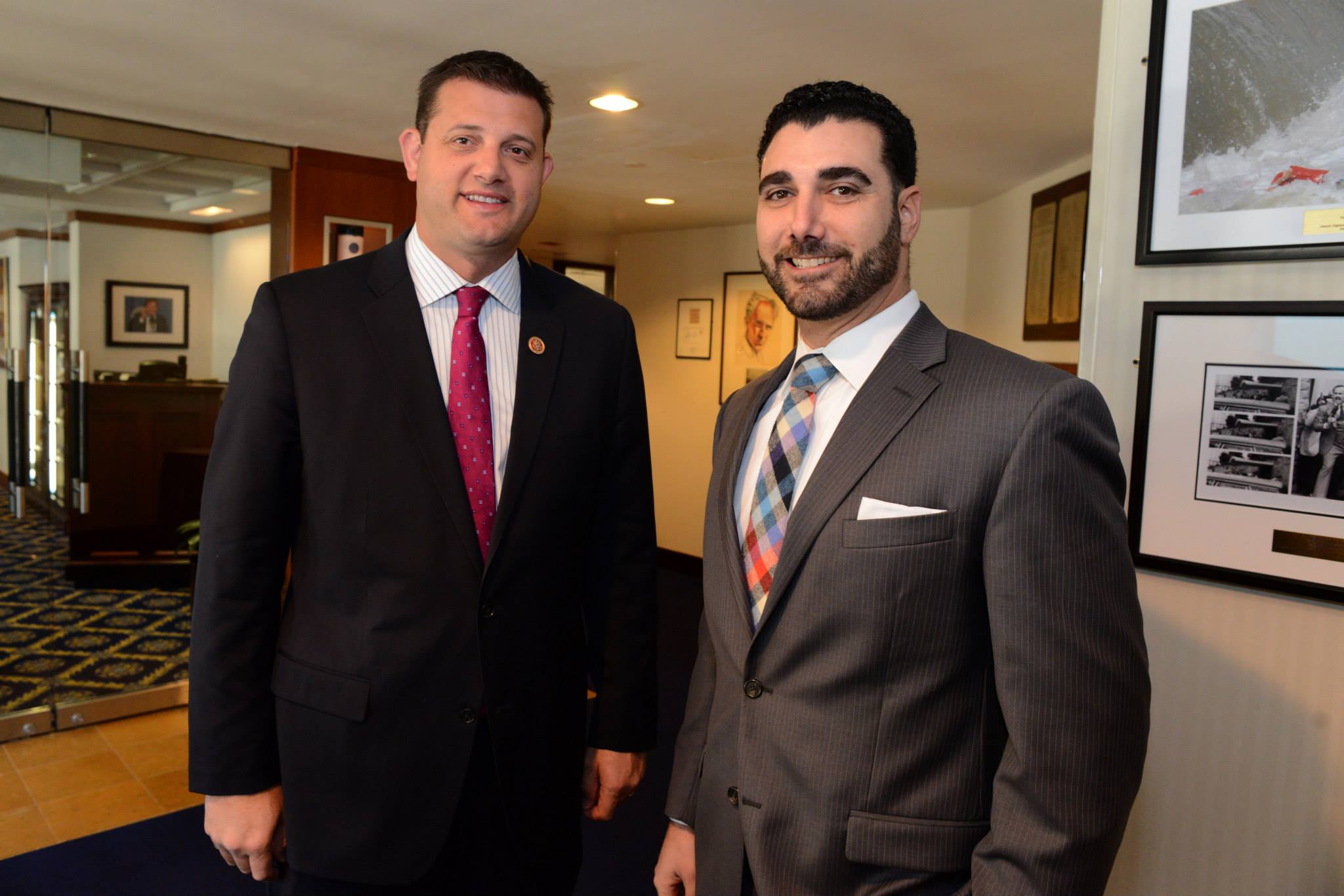
WASHINGTON DC – On January 26, 2021, Congressman David G. Valadao was named a co-chair of the Congressional Caucus on Armenian Issues.
“Armenia is a nation so many of my constituents know and love,” said Congressman Valadao. “During my time in Congress, I introduced several resolutions formally recognizing the Ottoman Empire’s deportation and extermination of over two million Armenian people and, after years of Armenian-American advocacy for this cause, the House and the Senate finally passed H.Res.296, Affirming the United States record on the Armenian Genocide. However, my fight on behalf of my Armenian-American constituents must continue. Armenians living in Nagorno Karabakh recently faced attacks from Azerbaijani forces in violation of their decade-old ceasefire agreement. This kind of aggression is unacceptable and must end immediately. I am committed to working with my colleagues in Congress on this issue and other issues of importance to the Armenian-American community as co-chair of the Congressional Caucus on Armenian Issues. We must continue to advocate for the Armenian people and encourage the new Administration to maintain and strengthen relationships between the United States, Armenia, and Artsakh [Nagorno Karabakh].”
“The Congressional Caucus on Armenian Issues has always operated in a bipartisan fashion, and I know our current co-chairs will continue this tradition,” stated Armenian Caucus Co-Chair Congressman Frank Pallone, Jr. (D-NJ). “I’m confident we will work together to ensure the United States strengthens its relationship with Armenia and supports its young, democratically elected government that was shaken by last year’s devastating aggressions by Azeri and Turkish forces in the region. I look forward to working with my colleagues on the Caucus to ensure the incoming Secretaries of State and Defense are focused on reassessing our strategic relationships in the Caucasus region, upholding the principle of human rights, and holding bad actors like Turkish President Erdogan accountable.”
“We’re very pleased to welcome Congressman Valadao back to Congress and even more excited that he is rejoining the leadership of the Congressional Armenian Caucus. His deep knowledge of the history of the Armenian people and of the current challenges the young Republics of Armenia and Artsakh face will do well in representing his Armenian American constituents and the broader community in the years ahead,” stated FLArmenians.com Editor Taniel Koushakjian.
Congressman Valadao joins Armenian Caucus co-chairs Reps. Frank Pallone Jr., Gus Bilirakis (R-FL), Jackie Speier (D-CA), and Vice-Chair Rep. Adam Schiff (D-CA).
Assembly Action Alert: Urge Congress to Sign the Letter to Biden Administration in Support of Closer US-Armenia Relations
WASHINGTON, DC – The Armenian Assembly of America (Assembly) is urging Armenian Americans to contact their Representative to ask them to sign a letter to the Biden administration to support a closer relationship between the United States and Armenia, and to send emergency aid to Artsakh.
Addressed to U.S. Secretary of State Antony Blinken and U.S. Secretary of Defense Lloyd Austin, the letter is currently gathering signatures in an effort spearheaded by Congressional Armenian Caucus Co-Chairs Reps. Frank Pallone, Jr. (D-NJ), Gus Bilirakis (R-FL), Jackie Speier (D-CA), David Valadao (R-CA), and Vice Chair Rep. Adam Schiff (D-CA).
The full text of the letter is below:
Hon. Antony Blinken
Secretary of State
U.S. Department of State
2201 C Street NW
Washington, DC 20520
Hon. Lloyd Austin
Secretary of Defense
U.S. Department of Defense
1300 Defense Pentagon
Washington, DC 20301
Dear Secretaries Blinken and Austin:
As members of the Congressional Caucus on Armenian Issues, we write to offer our congratulations on your recent confirmations and to share a list of our bipartisan priorities we hope to work together on during the 117th Congress.
One of the most pressing issues for the Caucus and for the future of American foreign policy in the South Caucasus region is the ongoing humanitarian crisis in Armenia and Nagorno-Karabakh (Artsakh). As you are aware, Azerbaijani and Turkish forces initiated an unprovoked attack on September 27, 2020, leading to six weeks of devastating fighting that killed an estimated 5,000 people and forced more than 100,000 ethnic Armenians to flee from the Karabakh region. Azerbaijani forces were able to make rapid advances into the region with the aid of Turkish-backed foreign mercenaries, many alleged to have ties to internationally recognized terrorist groups, Bayraktar drones that utilize American components and technology, and heavy weaponry including the illegal use of cluster and white phosphorus munitions.
With the rising risk of a mass atrocity against thousands of Armenian civilians, Armenia agreed to a peace agreement brokered by Russia on November 10. This agreement brought an end to the fierce combat, but it has done little to address the immediate and significant problems of feeding, sheltering, and ensuring the safety of thousands of displaced families during the COVID-19 pandemic. In violation of the ceasefire, Azerbaijan also refuses to free dozens of Armenian prisoners of war and apprehended civilians, which illustrates how this agreement fails to address the structural issues that have caused uncertainty and fueled the Nagorno-Karabakh conflict for decades. There remain several important issues that must be resolved and many critical questions that must be answered before a binding and durable peace settlement can be reached.
First, the terms laid out in the current ceasefire are untenable for Artsakh’s long-term security and stability in the region. The United States cannot allow Russia, Turkey, and Azerbaijan to solely dictate and dominate the situation in Nagorno-Karabakh. While we have seen some reengagement in the Organization for Security and Co-operation in Europe (OSCE) Minsk Group process, we believe more must be done to pursue an enduring settlement based on the fundamental right to self-determination. We appreciate the response Secretary Blinken gave during his confirmation hearing to this end, stating that he will “reinvigorate U.S. engagement to find a permanent settlement to the Nagorno-Karabakh conflict that protects the security of Nagorno-Karabakh and helps to ensure another war does not break out.”
In negotiations, our diplomats must insist that any future settlement supported by the United States will provide the people of Artsakh with the ability to reconstruct their communities and rebuild their lives without fear of further bloodshed. This should include significant U.S. commitments to provide an urgently needed humanitarian aid and assistance package for the people of Artsakh. The international community, including the United States, also has an important role to play by finally recognizing the right to self-determination for the people of Artsakh and their role as a legitimate negotiating party in resolving this conflict. Absent this recognition, they will continue to face the threat of displacement by Azerbaijani and Turkish forces without any option for formal redress.
Another important component of ensuring lasting peace in the region is to hold destabilizing actors accountable. There is significant evidence that Azerbaijani and Turkish forces planned the invasion in the buildup to the September 27 assault on Nagorno-Karabakh. This evidence includes the stockpiling of armaments, including drones that killed many innocent civilians during the conflict, the July 2020 provocations by Azerbaijani troops in Armenia’s Tavush province, and several instances of large-scale joint military exercises near the Armenian border that foreshadowed the coming attacks. The United States and other international actors failed to acknowledge these warning signs and take necessary steps to prevent the sharp and unprovoked escalation of violence.
Actions that could have been taken at the time to halt Azerbaijani and Turkish aggressions included threatening sanctions on high-ranking officials from those countries and withholding aid, including ending the waiver of Section 907 of the Freedom Support Act and ceasing further military assistance through the Section 333 Building Partner Capacity program. We are encouraged by Secretary Blinken’s response during the confirmation process on this subject as well.
Similarly, the United States must reassess our policy toward Turkey. Turkish President Recep Erdogan’s regime reaps the rewards of the chaos he has sown in the Eastern Mediterranean, Libya, the Middle East, and the South Caucasus. His deliberate destabilizing behavior, which includes the installation of Russian made anti-aircraft missiles over the threat of sanction by the United States, demands a swift and decisive correction. We must learn from the failures of an appeasement policy used by past administrations toward Turkey and use every available diplomatic and economic tool to penalize these bad actors for their aggressions and abhorrent human rights abuses. If we do not act, we risk the likelihood that the Erdogan regime will trigger an ever-expanding zone of conflict.
Finally, the United States should seek to strengthen our strategic relationship with Armenia, a young democracy that has been shaken by last year’s events and the resulting uncertainty they have caused. We urge you to identify ways we can provide additional economic assistance to Armenia to support its democracy and development as well as respond to the significant number of displaced people who have fled the conflict in Artsakh. We also request that your Administration identify ways in which our economic, cultural, and other ties to Armenia can be improved to benefit Armenia and the large Armenian American diaspora in the United States. Those steps should include the formal recognition of the Armenian Genocide by President Biden on April 24, following in the footsteps of both the House and Senate who passed resolutions recognizing the fact of the Genocide during the 116th Congress.
Thank you for attention to these important matters. We stand ready to work with you to craft a policy in the South Caucasus region that is consistent with U.S. national security, universal principles of human rights, and our democratic values. Our hope is to further discuss these issues with you and your teams at the earliest convenience.
Sincerely,
FRANK PALLONE, JR.
Member of Congress
GUS M. BILIRAKIS
Member of Congress
JACKIE SPEIER
Member of Congress
DAVID G. VALADAO
Member of Congress
ADAM B. SCHIFF
Member of Congress
48 Members of Congress Urge President Trump to Meet with Armenian Prime Minister Pashinyan

President Donald Trump and First Lady Melania Trump meet Armenian Prime Minister Nikol Pashinyan for the first time at the NATO Summit in Belgium on July 11, 2018.
Florida Congressmen Gus Bilirakis, Ted Deutch Sign Armenian Caucus Letter to White House
WASHINGTON, DC – The Congressional Caucus on Armenian Issues leadership spearheaded a letter signed by 48 Members of Congress sent to President Donald Trump urging him to meet with newly-appointed Prime Minister of Armenia, Nikol Pashinyan, during the annual United Nations General Assembly held in New York in September. Two members of Florida’s Congressional delegation, Armenian Caucus Vice Chair Rep. Gus Bilirakis (R-FL) and Rep. Ted Deutch (D-FL), signed the letter to President Trump.
The letter states: “The peaceful transition of power after the revolution is a clear indication of the will of the Armenian people, strongly demonstrating their commitment to a fairer and more democratic state. As Armenia seeks to bolster government transparency, strengthen democratic institutions, and empower civil society, it is critical for the United States to deepen its ties with this regional partner at every level of government.”
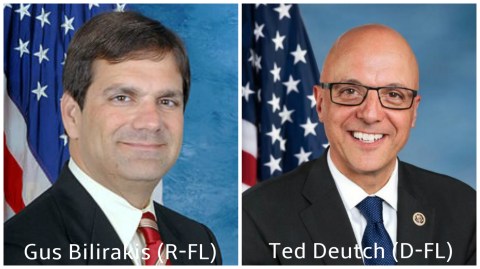
“I commend the people of Armenia for exercising their political rights and bringing about change in peaceful, democratic way,” Rep. Ted Deutch (D-FL) told FLARMENIANS. “The Velvet Revolution can serve as a model for the non-violent transfer of power. I am hopeful that the new government will serve the interests of the people and continue to bring democracy, transparency, and prosperity to Armenia,” Deutch said.
In addition to Armenian Caucus leaders Reps. Frank Pallone, Jr. (D-NJ), Dave Trott (R-MI), Jackie Speier (D-CA), and David Valadao (R-CA), the letter was signed by House Foreign Affairs Committee Chairman Rep. Ed Royce (R-CA), House Foreign Affairs Committee Ranking Member Eliot Engel (D-NY), House Intelligence Committee Chairman Devin Nunes (R-CA), and House Intelligence Committee Ranking Member Adam Schiff (D-CA).
The letter to President Trump also requests “a series of high-level conversations between [the President’s] Cabinet Secretaries and their counterparts in Armenia – many of whom have recently been appointed as members of the newly formed government.”
First Deputy Prime Minister of Armenia Ararat Mirzoyan with Rep. Brian Mast (R-FL) in Washington, D.C.
In that regard, the Embassy of Armenia in Washington, DC has been very active telling the story of the Armenian people’s embrace of democracy to U.S. policy makers. Last month, Armenia’s First Deputy Prime Minister Ararat Mirzoyan traveled to Washington, DC and met with U.S. Assistant Secretary of State Wess Mitchell; Senator Chris Van Hollen (D-MD); Armenian Caucus Co-Chairs Reps. Dave Trott (R-MI), Frank Pallone, Jr. (D-NJ), and David Valadao (R-CA); House Democracy Partnership President Rep. Peter Roskam (R-IL) and Vice President Rep. David Price (D-NC); and Rep. Brian Mast (R-FL). He also spoke before an audience of academics, diplomats, and government officials at the Carnegie Endowment for International Peace.
While Armenia’s Velvet Revolution can be felt by Armenian men and women, old and young, in every corner of the Diaspora, it is especially inspiring for Armenian Americans who wish to see U.S.-Armenia bilateral relationship reach the next level.




 Florida Armenians