Blog Archives
Armenian-Americans at RNC 2012: Support Mitt Romney for President
By Taniel Koushakjian
FLArmenians Political Contributor

The Tampa Bay Times Forum, Home of RNC 2012
Every four years, the campaign for the highest office of the land takes place. As candidates from the Republican Party navigated the choppy waters of the primary storm this election season, one man sailed to victory: former Massachusetts Governor Mitt Romney. Winning the party’s nomination was no easy feat and on several occasions, the media and members of his own party, were quick to write him off. However, Mitt Romney and his campaign rose to the challenge, and secured the 1,190 Republican Party Delegates necessary to clinch the nomination. No doubt, the battles he faced in the primary contest will come in handy when he goes head-to-head with President Obama.
Among these Republican Party Delegates, who are elected within their respective state party systems, were six Armenian-Americans. The States of Connecticut, Florida, Kentucky, Massachusetts, Michigan and Rhode Island were each represented by an official GOP Delegate of Armenian descent.
Harout Samra, an attorney in Miami said, “it was a privilege to attend the Republican National Convention as a delegate for Florida. Coming to the floor of the Convention hall for the first time was very exciting. Frankly, I did not expect to be as moved as I was. It was a great honor to have been selected to represent my fellow Floridians. That came home to me as I reached the floor. I genuinely enjoy interacting with people from different backgrounds. The United States is a remarkably diverse place, and I believe this diversity was represented not only in our delegation, but also in those of the other states. Florida’s delegation included first-generation Americans, such as myself, and longtime natives. It included Indian-Americans, Cuban-Americans, and even one Armenian-American.

Florida Lt. Gov. Jennifer Carroll, Florida Gov. Rick Scott, Harout Samra
“Governor Romney knows and understands the issues that are important to Armenian-Americans. Living in Belmont and serving as the Governor of Massachusetts, he’s had more important contacts and relationships with the Armenian-American community than any President since Ronald Reagan. He will not mislead us and pander to us to get Armenian-American votes like President Obama.
“Governor Romney is the right man for the moment. He understands how to turn around the economy at home and to ensure that America is respected abroad. Unlike President Obama, Governor Romney’s top priority will be to create an environment that leads to more jobs and spurs economic growth,” stated Samra.
Another Republican Party Delegate, Bob Semonian, State Chairman of Massachusetts Republican Party-Ethnic Outreach expressed that he was “thrilled to attend the Republican National Convention in Tampa this year. Americans want honesty in the White House and Mitt Romney is an honest man who will best represent all of America,” stated Semonian, who also serves as the Armenian-Americans for Mitt Romney Coalition Massachusetts State Chair.

Bob Semonian with Josh Romney
From the Great Lakes State was Krista Haroutunian, who serves as the Republican Party Chair for the 13th Congressional District. She stated, “My time at the 2012 RNC was extremely important and made me proud to be American, an Armenian, and from Detroit, Michigan.” Haroutunian continued, “The first concern of an American, of whatever cultural or ethnic background, is the independence, freedom, and well-being of Americans. This allows us to be able to express concerns for Armenian issues and to assist appropriately.
“Mr. Romney knows that the founding fathers of America had great concerns about dictatorial attitudes and insisted upon a separation of powers – something Mr. Obama has side-stepped for the better part of four years. Mr. Romney wants to return to a Constitutional government through our elected Representatives. Mr. Obama wants all-pervasive government with the decision makers being unelected bureaucrats.
“The choice is clear – constitutional guarantees and responsibilities to preserve the rule of law versus arbitrary actions from a few with no guarantees of the rule of law. For all Armenians and all Americans, Mitt Romney is the best choice.”
Over the course of this year, several Armenian-Americans across the country, including the author, have been challenged on our position of supporting Governor Romney over President Obama. “What do you expect from Romney that will be different from Obama,” is the common intrigue. To put it plainly, like all Americans, we expect leadership, honesty and values from our elected officials. When it comes to Armenian issues, President Obama failed to fulfill his campaign pledge to acknowledge the Armenian Genocide as President. That calls into question his honesty. President Obama’s nomination and subsequent recess appointment of Matthew Bryza to serve as Ambassador to Azerbaijan was opposed by Senators of his own party, not to mention many Armenian-Americans. That calls into question his ability to lead. And the silence of the Obama administration on the destruction, confiscation and profiteering of Christian Armenian religious properties by the Turkish Government, as well as Azerbaijan’s completed destruction of centuries-old Armenian Khachkars at Julfa, call into question his values.
From Fresno to Philadelphia, from Manchester to Miami, from Detroit to Denver, from Waukesha to Washington, DC, Armenian-Americans have expressed their frustration with President Obama, and many former Armenian supporters of his are now backing Mitt Romney for President. In fact, one prominent Armenian-American who supported President Obama in 2008, and is now backing Governor Romney, expressed as much to the author. Speaking on the condition of anonymity, she shared her frustration: “Senator Obama chose to promise, in campaign speeches and written outreach, recognition of the 1915 genocide of Armenians at the hands of Ottoman Turks. He fully understood the importance of that issue to the Armenian American community and indeed to all right thinking Americans. Americans deserve a President who knows his principles and makes his decisions in accordance with those principles. Americans deserve a President who has integrity. So why come November would I vote for a President who over the course of four years has delivered precious little and lied to us and other communities?”
Indeed, why would we? She then confessed, “I’ll take a chance on Romney.”
This article originally appeared in the October 13, Volume 13 Print Edition of the Armenian Mirror-Spectator.
Diocesan Staff Give Presentations in Tampa, Orlando Parishes
The Diocese’s Armenian Studies coordinator Gilda Kupelian and Christian Education coordinator Elise Antreassian visited two Florida parishes, where they made presentations and held meetings with local community leaders and educators.
On Saturday, July 21, Kupelian and Anteassian led a program titled “Raising Children of Faith in the Armenian Tradition – What Every Parent Should Know,” at St. Hagop Armenian Church in St. Petersburg. Over 30 parishioners attended, gathering in the sanctuary for a discussion on spiritual formation and a PowerPoint survey on important Armenian historical, literary, and cultural figures. A fellowship hour followed, during which the community considered a parish retreat in the fall or spring.

Armenian Community Members in Tampa
The afternoon program was arranged by the Rev. Fr. Hovnan Demerjian, pastor at St. Hagop Armenian Church. Their membership has nearly tripled in recent years according to Fr. Demerjian, who has been working tirelessly with the Parish Council to plan Sunday School, youth, and cultural initiatives to serve the needs of the growing community.
On Sunday, July 22, Diocesan staff visited Soorp Haroutiun Armenian Church in Orlando, where more than 50 parishioners gathered for the day’s program. Visiting priest Rev. Fr. Abraham Malkhasyan celebrated the Divine Liturgy.
Following services, Ms. Kupelian gave a PowerPoint presentation on Armenian heritage and culture. Ms. Kupelian and Ms. Antreassian then met with the pastor, Parish Council member Rita Harvey, parishioner Anna Stepanyan Vega, and teaching volunteers to discuss the launch of a new Sunday School in the fall. The school will offer both Christian and Armenian studies for parish children and teens.
US House Foreign Affairs Committee Passes Legislation Calling on Turkey to Re-open Halki Seminary, Chairwoman Ros-Lehtinen Calls on Turkey to End Occupation of Cyprus
By Taniel Koushakjian
FLArmenians Political Contributor
Miami, FL – Last month, the US House Foreign Affairs Committee passed H. Res. 506, legislation “calling on the Government of Turkey to facilitate the reopening of the Ecumenical Patriarchate’s Theological School of Halki without condition or further delay.” A symbolic measure similar to the Armenian Genocide resolution, H. Res. 506 (the Halki bill) is a non-binding, sense of the House resolution and has no legal or statutory effect. Florida Congressman, and member of the House Foreign Affairs Committee, Gus Bilirakis (R-FL), introduced the Halki bill. Bilirakis is the Co-Chair of the Congressional Hellenic Caucus, and a member of the Congressional Armenian Caucus and International Religious Freedom Caucus.
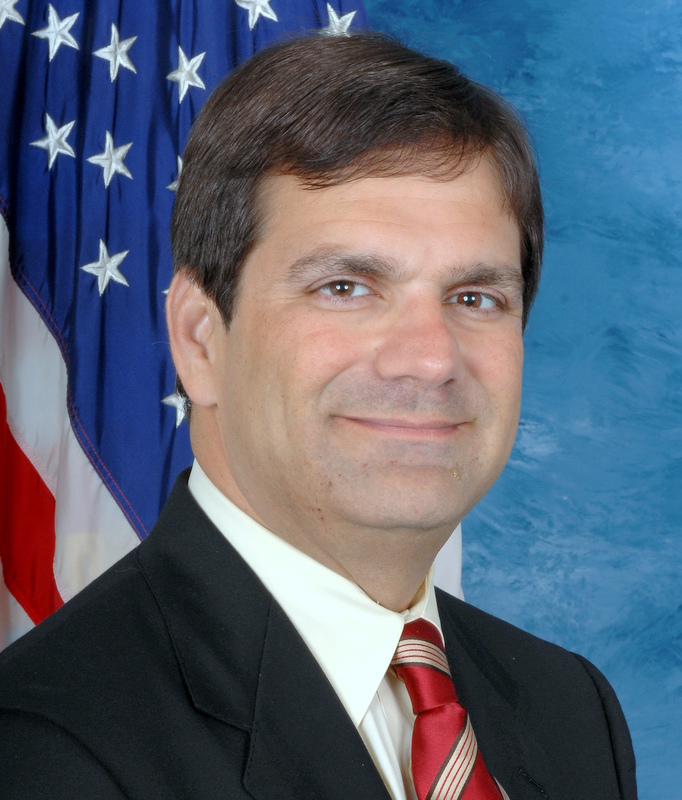
Rep. Gus Bilirakis (R-FL)
Founded in 1844, the Theological School of Halki served as the principal seminary for the Greek Orthodox Ecumenical Patriarchate until Turkish authorities forcibly closed the institution in 1971. “It is time that the Theological School at Halki is immediately reopened with no preconditions,” Congressman Bilirakis said. “What the Orthodox Christian community and all religious freedom watchdogs throughout the world are asking for is simply that Turkey abides by its constitution, which secures religious rights for all of its citizens and institutions,” stated Bilirakis.
In addition to Congressman Bilirakis, 35 Members of Congress cosponsored the bill, including House Foreign Affairs Committee Chairwoman Ileana Ros-Lehtinen (R-FL), and Florida Representatives Mario Diaz-Bolart (R-FL), Frederica Wilson (D-FL), David Rivera (R-FL) and Allen West (R-FL). The next step in the legislative process is for H. Res. 506 to be scheduled for a vote on the House floor. There is no indication that the Halki bill will receive a vote by the full House at this time. However, given the upcoming Presidential election, it would not be surprising to see H. Res. 506 pass the House of Representatives before November.
Two weeks following committee passage of H. Res. 506, Chairwoman Ros-Lehtinen wrote a punishing Op-Ed in the Washington Times explicitly calling on Turkey to leave Cyprus in peace. In her opinion column, Ros-Lehtinen strongly condemned the “illegal military occupation of Cyprus by Turkish troops,” highlighting the “75 [United Nations Security Council] resolutions calling for Turkey to allow Greek Cypriots to return to their homes and to withdraw its troops from Cyprus.”
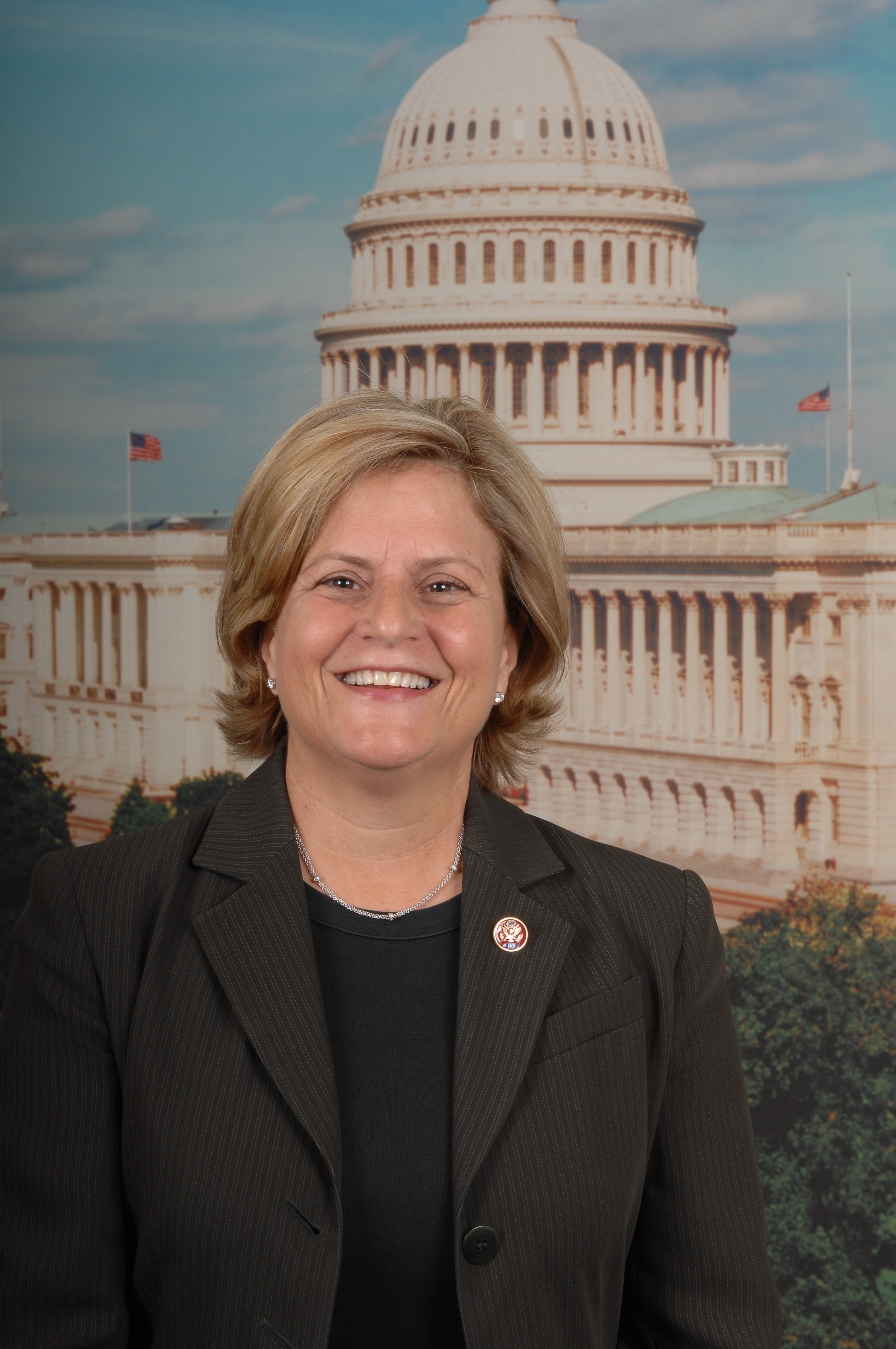
Rep. Ileana Ros-Lehtinen (R-FL)
Turkey invaded the Mediterranean island in 1974, dividing it between the north and south, causing massive destruction of life, land and religious artifacts. The decades long presence of Turkish troops in Cyprus, which today number 40,000, in addition to Ankara’s promotion of mainland-Turkish emigration to the occupied territory, amount to Turkey’s “creeping annexation” of the island, according to Ros-Lehtinen.
Cyprus is a member of the European Union (EU), which Turkey aspires to join, with US support. Yet Turkey does not recognize the existence of the Cypriot Republic, a major obstacle in Turkey’s EU bid. In recent months, pressure has been mounting heavily on Turkey to end its illegal occupation and help bring about a peaceful reunification of the island, since Cyprus assumed the rotating EU Presidency on July 5.
As Ros-Lehtinen points out in her column, Turkish Prime Minister Recep Tayyip Erdogan’s statements unequivocally illustrate Ankara’s annexation policy. While in Cyprus last year Erdogan told Turkish-Cypriots, “If you don’t want us to send people, you need to have more babies.” Also last year, Erdogan visited Germany; home to approximately 3 million ethnic Turks. In his address to the Turkish-German community Erdogan told his ethnic kin to integrate into German society, but to resist “assimilation,” irking German officials. Statements such as these do little to quell Western fears of the Turkish Prime Minister and his ruling Justice & Development Party’s growing neo-Ottomanism, which many view as an extension of the Ottoman Empire’s pan-Turanism policy. That policy led to the 1915 Armenian Genocide, where 1.5 million Armenians perished in a systematic effort by Ottoman Turks to cleans Anatolia of its ethnic Christian (Armenian, Greek and Assyrian) origins.
Chairwoman Ros-Lehtinen is a member of the Armenian Caucus, Hellenic Caucus & Turkish Caucus. As previously reported by FLArmenians, Chairwoman Ros-Lehtinen was instrumental in the successful passage of H. Res. 306, the Protection of Christian Heritage bill, by the full House of Representatives in December of last year. Ros-Lehtinen and Bilirakis are the only members on the Armenian Caucus from the Florida delegation, and the only members of the Florida delegation to cosponsor H. Res. 306.
In February, the American Hellenic Institute (AHI) held a screening of the one-hour documentary “Cyprus Still Divided: A US Foreign Policy Failure,” at the Archimedean Academy Amphitheater in Miami, Florida. Chairwoman Ros-Lehtinen offered the keynote address at this event and expressed strong support for Hellenic-American issues. Reflecting on her family’s experience fleeing the communist regime of Cuban dictator Fidel Castro, “I know…what is at stake if we in this country fail to support the Greek-Cypriots in their struggle,” Ros-Lehtinen said.
Whether Congressional leaders genuinely support efforts to protect international religious freedom in Turkey, especially in the face of growing persecution of Christian minorities and a culture of anti-Christian intimidation throughout the Middle East, remains to be seen in either US law or the execution of foreign policy. Although foreign relations is Constitutionally reserved to the Executive branch, Congress retains many tools at its disposal, such as the state department authorization act, national defense authorization act, foreign assistance appropriations measures, and the authorization of US military and defense company procurements, all of which have the ability to dramatically impact US policy in the region.




 Florida Armenians