Blog Archives
Special Briefing & Update on 2012 US Elections
This Sunday, August 19, Florida Armenians Editor Taniel Koushakjian will provide a special briefing and update on the status of the 2012 US elections and what it means for the Armenian-American community. In January, Koushakjian wrote about the early days of the US elections. In an article entitled, “Campaign 2012: A Look Through the Armenian-Americans Lens,” he examined federal races from across the US and provided analysis on the implications for Armenian-Americans issues in Congress. Koushakjian will provide an update on his column and provide key insight on the race for the White House and Congress.
WHAT: Special Briefing & Update on 2012 US Election
WHEN: Sunday, August 19, 2012 after Badarak (approximately 1 PM)
WHERE: St. David Armenian Church, Mardigian Hall, 2300 Yamato Road, Boca Raton, Florida 33431
WHO: Taniel Koushakjian, Editor, FLArmenians.com
Below is an interview (in Armenian) given by Taniel Koushakjian to Voice of America’s Armenian Service.
Please join us for this informative presentation and discussion and learn why it’s important for Armenian-Americans to be a part of the American democratic process. A brief Q & A will follow the presentation. This event is free and open to the public.
US House of Representatives Defeats Turkey Biased Legislation
Majority of Florida Delegation Opposed Turkey-Skewed Measure
By Taniel Koushakjian
FLArmenians Political Contributor
Washington, DC – Yesterday, the US House of Representatives voted down legislation, on a bipartisan basis, that singled out Turkey for preferential treatment to engage in economic development projects on specific Indian tribal lands in the United States. H.R. 2362, the Indian Tribal Trade and Investment Demonstration Project Act, was brought to the floor for a vote under the suspension of the rules, which requires a two-thirds majority for passage. The measure was defeated 222-160, falling short of the 255 votes needed.
Speaking in support of H. R. 2362 were Representatives Doc Hastings (R-WA), Tom Cole (R-OK), Virginia Foxx (R-NC), James Moran (D-VA), Dan Boren (D-OK) along with Delegate Eni Faleomavaega (D-AS), while Armenian Caucus Co-Chair Frank Pallone, Jr. (D-NJ), Hellenic Caucus Co-Chair Carolyn Maloney (D-NY) and Congressman John Sarbanes (D-MD) led the charge against the legislation. On the day of the vote, Congressman Bilirakis, joined by his fellow Hellenic and Armenian Caucus colleagues, issued a “Dear Colleague” letter to House members, urging their opposition to H.R. 2362.
In a statement released by the Armenian Assembly of America, bill sponsor Cole noted in his remarks that the Turkish Coalition of America approached him about the bill. “According to campaign contribution records, Representative Cole has received $6,000 in Turkish PAC money this cycle while Representative Foxx received $10,000,” read the Assembly’s statement.
A majority of Representatives from the Florida delegation opposed giving preferential treatment to the Republic of Turkey. Florida representatives voting in opposition to H.R. 2362 include Reps. Sandy Adams (R-FL), Gus Bilirakis (R-FL), Corrine Brown (D-FL), Kathy Castor (D-FL), Ted Deutch (D-FL), Mario Diaz-Bolart (R-FL), Jeff Miller (R-FL), Rich Nugent (R-FL), David Rivera (R-FL), Tom Rooney (R-FL), Dennis Ross (R-FL), Steve Southerland (R-FL), Debbie Wasserman-Schultz (D-FL), Frederica Wilson (D-FL), C.W. Bill Young (R-FL), and Allen West (R-FL). Voting in favor of the legislation were Florida Reps. Vern Buchanan (R-FL), Ander Crenshaw (R-FL), Alcee Hastings (D-FL), John Mica (R-FL), Bill Posey (R-FL), Ileana Ros-Lehtinen (R-FL), Daniel Webster (R-FL) and Cliff Stearns (R-FL). Congressman Connie Mack (R-FL), who is anticipated to win the Republican nomination in the Florida Senate race, was not present at yesterday’s vote.
According to the Armenian National Committee, “the measure was opposed by a broad spectrum of Hellenic and Armenian American organizations, including the American Hellenic Educational and Progressive Association (AHEPA), American Hellenic Institute (AHI), American Hellenic Council (AHC), the ANCA and the Armenian Assembly of America, all of which alerted House members about the negative repercussions of passing the controversial pro-Turkey measure.”
You can watch the debate on H.R. 2362 here.
*Updated July 26, 2012 at 11:55 AM
US House Foreign Affairs Committee Passes Legislation Calling on Turkey to Re-open Halki Seminary, Chairwoman Ros-Lehtinen Calls on Turkey to End Occupation of Cyprus
By Taniel Koushakjian
FLArmenians Political Contributor
Miami, FL – Last month, the US House Foreign Affairs Committee passed H. Res. 506, legislation “calling on the Government of Turkey to facilitate the reopening of the Ecumenical Patriarchate’s Theological School of Halki without condition or further delay.” A symbolic measure similar to the Armenian Genocide resolution, H. Res. 506 (the Halki bill) is a non-binding, sense of the House resolution and has no legal or statutory effect. Florida Congressman, and member of the House Foreign Affairs Committee, Gus Bilirakis (R-FL), introduced the Halki bill. Bilirakis is the Co-Chair of the Congressional Hellenic Caucus, and a member of the Congressional Armenian Caucus and International Religious Freedom Caucus.
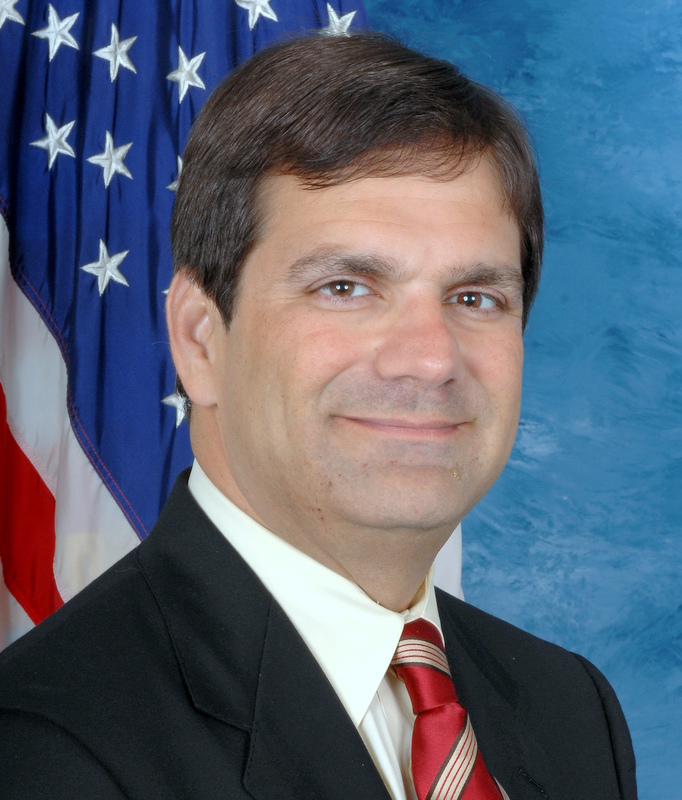
Rep. Gus Bilirakis (R-FL)
Founded in 1844, the Theological School of Halki served as the principal seminary for the Greek Orthodox Ecumenical Patriarchate until Turkish authorities forcibly closed the institution in 1971. “It is time that the Theological School at Halki is immediately reopened with no preconditions,” Congressman Bilirakis said. “What the Orthodox Christian community and all religious freedom watchdogs throughout the world are asking for is simply that Turkey abides by its constitution, which secures religious rights for all of its citizens and institutions,” stated Bilirakis.
In addition to Congressman Bilirakis, 35 Members of Congress cosponsored the bill, including House Foreign Affairs Committee Chairwoman Ileana Ros-Lehtinen (R-FL), and Florida Representatives Mario Diaz-Bolart (R-FL), Frederica Wilson (D-FL), David Rivera (R-FL) and Allen West (R-FL). The next step in the legislative process is for H. Res. 506 to be scheduled for a vote on the House floor. There is no indication that the Halki bill will receive a vote by the full House at this time. However, given the upcoming Presidential election, it would not be surprising to see H. Res. 506 pass the House of Representatives before November.
Two weeks following committee passage of H. Res. 506, Chairwoman Ros-Lehtinen wrote a punishing Op-Ed in the Washington Times explicitly calling on Turkey to leave Cyprus in peace. In her opinion column, Ros-Lehtinen strongly condemned the “illegal military occupation of Cyprus by Turkish troops,” highlighting the “75 [United Nations Security Council] resolutions calling for Turkey to allow Greek Cypriots to return to their homes and to withdraw its troops from Cyprus.”
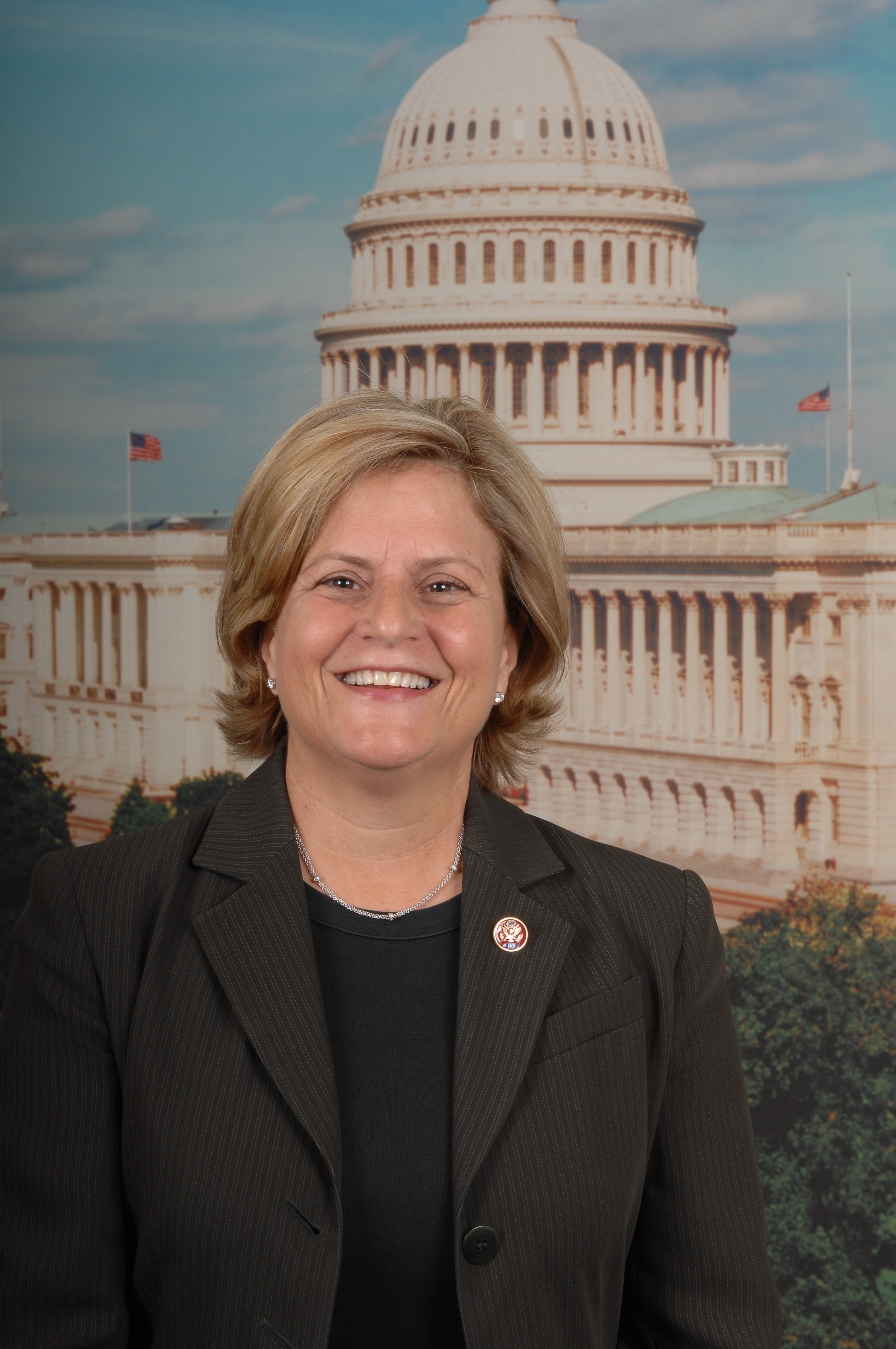
Rep. Ileana Ros-Lehtinen (R-FL)
Turkey invaded the Mediterranean island in 1974, dividing it between the north and south, causing massive destruction of life, land and religious artifacts. The decades long presence of Turkish troops in Cyprus, which today number 40,000, in addition to Ankara’s promotion of mainland-Turkish emigration to the occupied territory, amount to Turkey’s “creeping annexation” of the island, according to Ros-Lehtinen.
Cyprus is a member of the European Union (EU), which Turkey aspires to join, with US support. Yet Turkey does not recognize the existence of the Cypriot Republic, a major obstacle in Turkey’s EU bid. In recent months, pressure has been mounting heavily on Turkey to end its illegal occupation and help bring about a peaceful reunification of the island, since Cyprus assumed the rotating EU Presidency on July 5.
As Ros-Lehtinen points out in her column, Turkish Prime Minister Recep Tayyip Erdogan’s statements unequivocally illustrate Ankara’s annexation policy. While in Cyprus last year Erdogan told Turkish-Cypriots, “If you don’t want us to send people, you need to have more babies.” Also last year, Erdogan visited Germany; home to approximately 3 million ethnic Turks. In his address to the Turkish-German community Erdogan told his ethnic kin to integrate into German society, but to resist “assimilation,” irking German officials. Statements such as these do little to quell Western fears of the Turkish Prime Minister and his ruling Justice & Development Party’s growing neo-Ottomanism, which many view as an extension of the Ottoman Empire’s pan-Turanism policy. That policy led to the 1915 Armenian Genocide, where 1.5 million Armenians perished in a systematic effort by Ottoman Turks to cleans Anatolia of its ethnic Christian (Armenian, Greek and Assyrian) origins.
Chairwoman Ros-Lehtinen is a member of the Armenian Caucus, Hellenic Caucus & Turkish Caucus. As previously reported by FLArmenians, Chairwoman Ros-Lehtinen was instrumental in the successful passage of H. Res. 306, the Protection of Christian Heritage bill, by the full House of Representatives in December of last year. Ros-Lehtinen and Bilirakis are the only members on the Armenian Caucus from the Florida delegation, and the only members of the Florida delegation to cosponsor H. Res. 306.
In February, the American Hellenic Institute (AHI) held a screening of the one-hour documentary “Cyprus Still Divided: A US Foreign Policy Failure,” at the Archimedean Academy Amphitheater in Miami, Florida. Chairwoman Ros-Lehtinen offered the keynote address at this event and expressed strong support for Hellenic-American issues. Reflecting on her family’s experience fleeing the communist regime of Cuban dictator Fidel Castro, “I know…what is at stake if we in this country fail to support the Greek-Cypriots in their struggle,” Ros-Lehtinen said.
Whether Congressional leaders genuinely support efforts to protect international religious freedom in Turkey, especially in the face of growing persecution of Christian minorities and a culture of anti-Christian intimidation throughout the Middle East, remains to be seen in either US law or the execution of foreign policy. Although foreign relations is Constitutionally reserved to the Executive branch, Congress retains many tools at its disposal, such as the state department authorization act, national defense authorization act, foreign assistance appropriations measures, and the authorization of US military and defense company procurements, all of which have the ability to dramatically impact US policy in the region.




 Florida Armenians